
info@datatroops.io
WHERE KAFKA STRUGGLES AND PULSAR SHINES: REAL-WORLD SCENARIOS EXPLAINED
Jashan Goyal
Founder & CEO
Distributed Systems Expert
Specializing in event streaming architecture
10+ years in software development
Summary
Apache Kafka has been the default standard for real-time data streaming, but as infrastructure evolved toward cloud-native architectures, its monolithic design shows its age. This deep dive explores real-world scenarios where Apache Pulsar's decoupled storage-compute architecture solves operational pain points that keep Kafka admins up at night—from elastic scaling under load to multi-tenancy, geo-replication, and beyond.
The Standard vs. The Cloud-Native
If you ask any data engineer to name the default standard for moving real-time data, the answer is almost reflexive. Kafka owns event streaming. Massive throughput. Battle-tested reliability. An ecosystem that spans the enterprise. For static, high-volume pipelines, it's still king.
But infrastructure evolved. Kafka didn't.
Born in the bare-metal era, Kafka married storage to compute—a design choice that made sense when servers were physical boxes. Fast forward to today's Kubernetes-native world, and that tight coupling becomes a constraint. Elasticity? Resource isolation? Kafka fights you every step.
Enter Apache Pulsar: event streaming rebuilt for the cloud-native age. By ripping apart storage and compute, Pulsar eliminates the operational pain points that keep Kafka admins up at night.
This isn't theory. We're diving into real-world scenarios where architecture doesn't just matter—it's everything.
1. Rebalancing Under Load: The Scale-Out Penalty
The nightmare: Your Black Friday traffic just 10x'd. You need more brokers. Now.
Kafka's Problem
Because storage lives on broker disks, adding capacity means physically copying terabytes of existing partitions to new nodes. At the exact moment you're drowning in traffic, Kafka saturates your network with rebalancing work. Performance tanks. Latency spikes. The cure becomes the disease.
Pulsar's Solution
New brokers are stateless. They instantly claim topic bundles and start serving traffic—zero data movement required. Historical data stays safely in BookKeeper while your new capacity goes live in seconds. Elastic scaling that actually works when you need it.
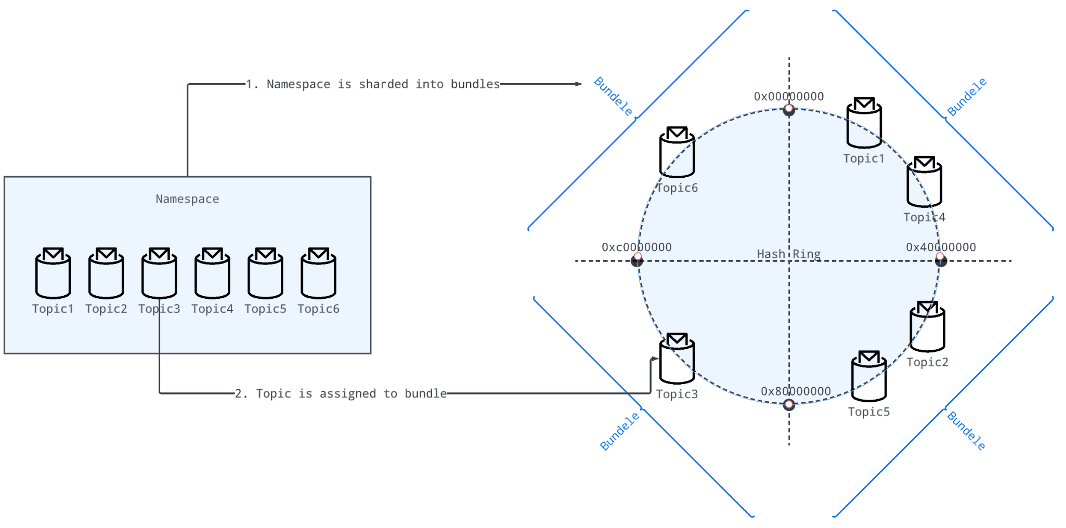
Pulsar's stateless brokers enable instant scaling without data movement
2. Unified Messaging: Streams and Queues on the Same Topic
The reality: Half your services need strict ordering (streams). The other half need parallel work distribution (queues).
Kafka's Problem
Kafka only does streams. Want 50 workers processing jobs in parallel? Over-partition everything and pray. One message fails? The entire partition blocks—classic head-of-line blocking. Most teams end up running two systems: Kafka for pipelines, RabbitMQ for tasks.
Pulsar's Solution
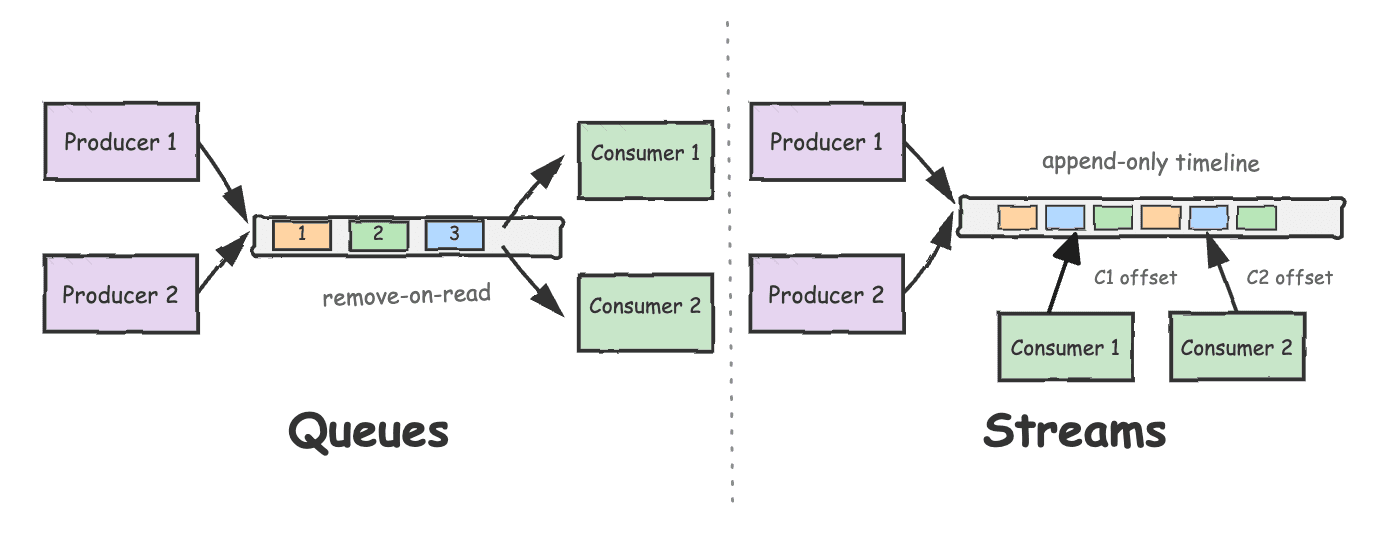
One topic, multiple subscription modes. Team A uses "Exclusive" for ordered streaming. Team B uses "Shared" for round-robin work queues with per-message acks. Same data, different consumption patterns. One platform to manage.
- Exclusive:: One consumer, strict ordering.
- Shared:: Round-robin distribution across consumers.
- Failover:: Active-standby for high availability.
- Key_Shared:: Ordering per key with parallel processing.
Pulsar's stateless brokers enable instant scaling without data movement
3. Tiered Storage: Making Petabyte Retention Economical
The requirement: Compliance demands 2 years of event history. Cool. That'll be $400K/year in NVMe storage.
Kafka's Problem
Data lives on expensive broker disks. Petabyte retention = petabyte bills for high-performance block storage. Tiered storage exists now, but it's a bolt-on afterthought.
Pulsar's Solution
Native tiered storage. Cold data automatically offloads to S3 at pennies per GB. A consumer requests a year-old message? Pulsar fetches it transparently. The client never knows it came from object storage. Infinite retention stops being a budget negotiation.
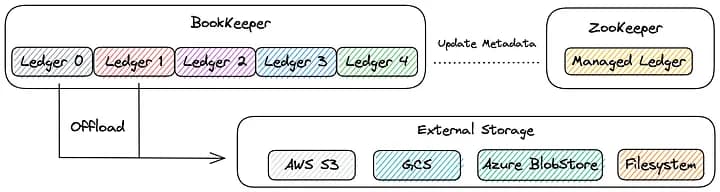
Pulsar's native tiered storage enables cost-effective long-term retention
4. Multi-Tenancy: Resource Isolation at the Namespace Level
The scenario: You're Platform Engineering. 50 internal teams want event streaming. You need one production cluster, not 50 Franken-deployments.
Kafka's Problem
Kafka is single-tenant wearing an ACL disguise. Analytics replays 3 years of data? They saturate disk I/O. Billing's real-time latency explodes to 200ms because everyone fights for the same broker IOPS. Quotas are crude byte limits—no true resource isolation.
Pulsar's Solution
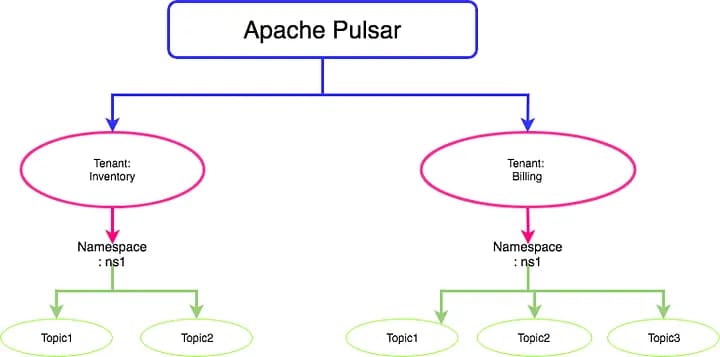
Hardware-level multi-tenancy. The hierarchy is Tenant → Namespace → Topic. You can pin "Billing" to specific brokers. Analytics hammers their nodes at 100% CPU? Billing's brokers don't flinch. True isolation inside a single logical cluster.
- Tenant:: Top-level isolation boundary with its own authentication.
- Namespace:: Resource policies, retention rules, and broker affinity.
- Topic:: The actual message stream with inherited policies.
Pulsar's stateless brokers enable instant scaling without data movement
5. Geo-Replication: Native Cross-Region Consistency
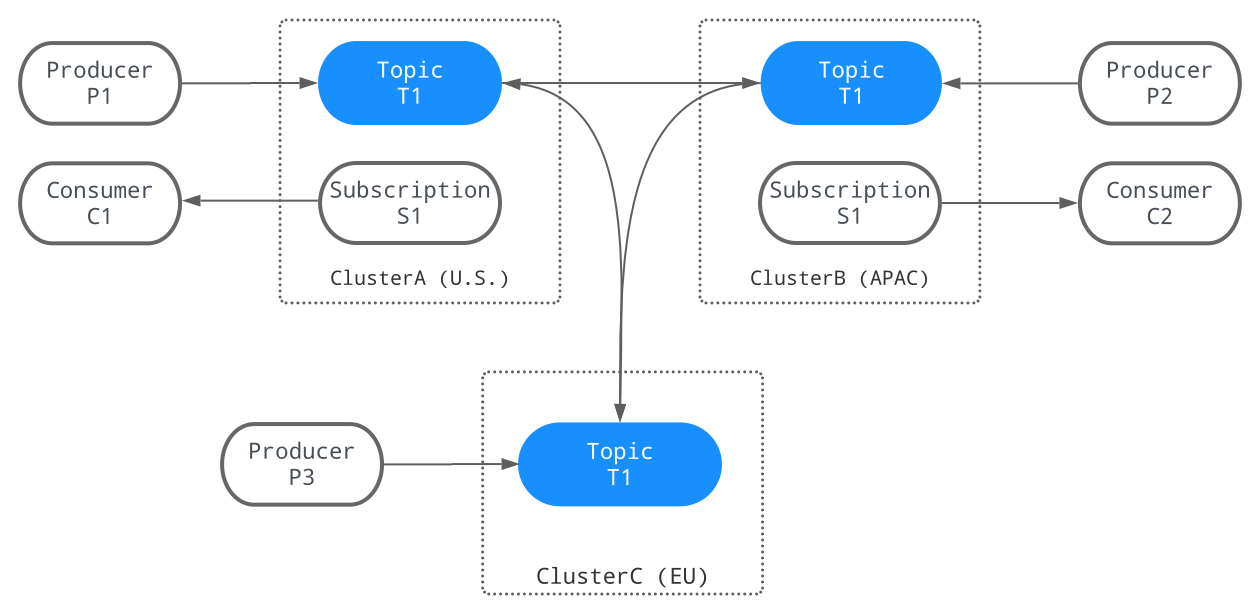
The goal: New York and London both write. If us-east-1 dies, eu-central-1 picks up instantly. Zero downtime.
Kafka's Problem
MirrorMaker 2 is a separate cluster of consumer-producer pairs you babysit. Replication lag is constant. Active-Active requires hacky topic renaming (us-east.orders vs eu-central.orders) to avoid infinite loops. It's fragile operational theater.
Pulsar's Solution
Native geo-replication baked into brokers. Enable it with one command:
setNamespaceReplicationClusters(["us-east", "eu-central"])
Write in NY, read in London using the same topic name. Seamless failover. No external tooling to nurse.
Pulsar's stateless brokers enable instant scaling without data movement
6. Metadata Scaling: Supporting Millions of Topics
The use case: IoT platform. One topic per device. You hit 500,000 topics and need to scale further.
Kafka's Problem
Each partition = directory on disk + ZooKeeper metadata. Push past 200K partitions and the metadata engine chokes. Controller failovers take minutes loading state. The whole system becomes unstable.
Pulsar's Solution
Topics are logical paths. Actual data lives in BookKeeper segments. A BookKeeper node doesn't care which topic a segment belongs to—it just stores blocks. Millions of topics on a single cluster without breaking a sweat. Default choice for MQTT and per-user streams.
7. In-Cluster Compute: Pulsar Functions vs External Stream Processing
The task
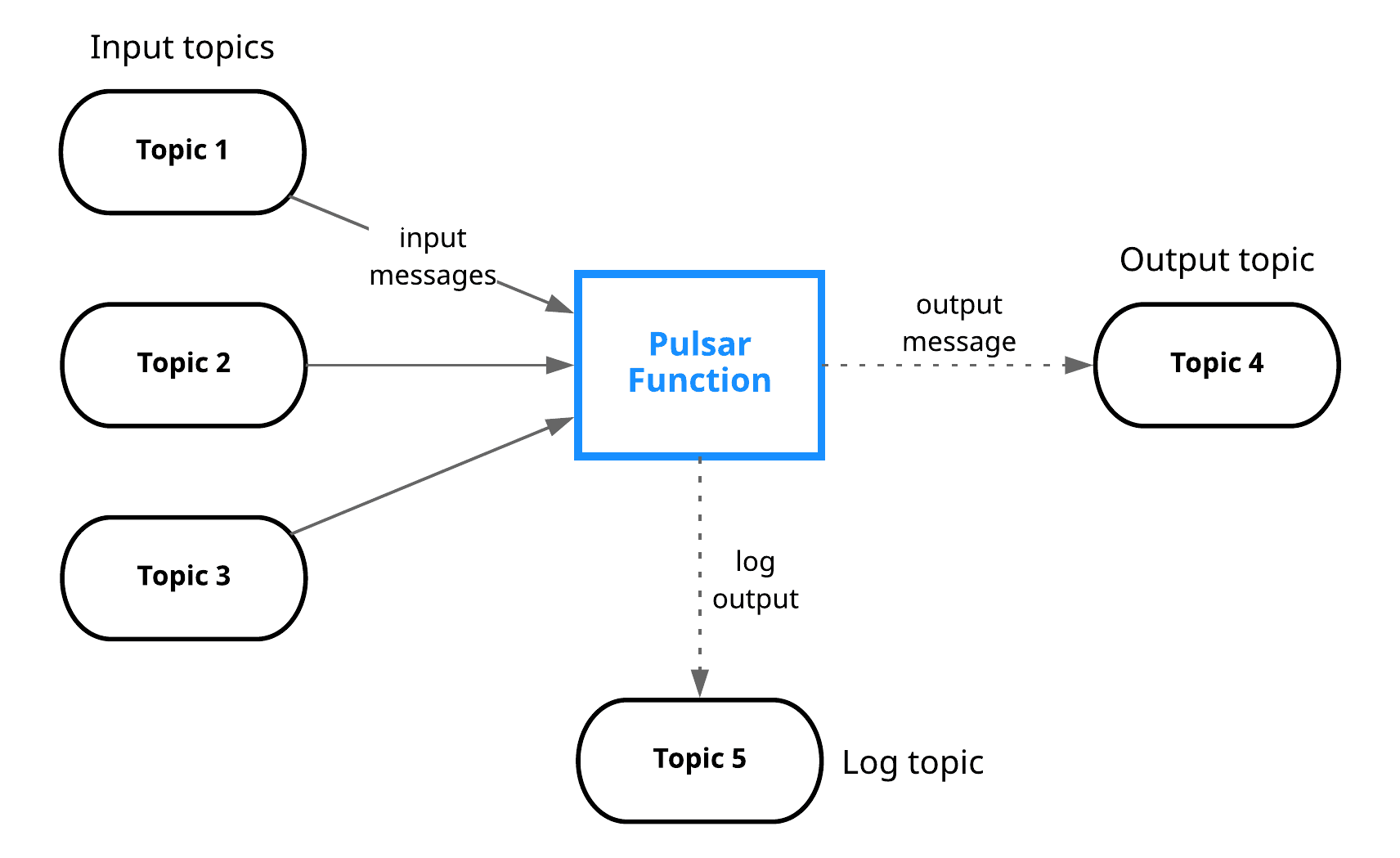
Route messages based on status. error → alert-topic. Everything else → archive-topic. Basically an if-statement.
Kafka's Problem
Write a Kafka Streams app. In Java. Compile it. Containerize it. Deploy to Kubernetes. Manage its lifecycle. You just wrote 300 lines of infrastructure for if status == "error".
Pulsar's Solution
Pulsar Functions—serverless compute inside the cluster. Submit a Python function:
Pulsar Function Example def process(input): return "alert-topic" if input.status == "error" else "archive-topic"
Done. No external app servers. AWS Lambda vibes, but native to your message bus.
Pulsar Functions enable serverless stream processing without external infrastructure
Conclusion
The debate between Apache Kafka and Apache Pulsar is often framed as a feature comparison, but that misses the point. It is fundamentally a debate about architecture.
Kafka: The Monolith A monolithic architecture designed for a world of static resources. It excels at raw throughput in environments where the topology is fixed, and the workload is predictable. It is the mainframe of the streaming world: robust, proven, and practically unbreakable—until you try to change it.
Pulsar: The Cloud-Native A cloud-native architecture designed for a world of dynamic resources. By decoupling compute from storage, it accepts that hardware fails, traffic spikes, and requirements change. It treats elasticity not as an operational event, but as a continuous state.
Final Thoughts
Migration is never free. Kafka has a decade of momentum and tooling that Pulsar is still chasing. However, operational debt attracts compound interest. If you are spending 20% of your engineering time managing rebalances, debugging MirrorMaker loops, or maintaining sidecar RabbitMQ clusters, the cost of migration might be lower than the cost of staying put.
In the cloud-native era, the best tool is the one that allows you to treat your infrastructure as software, not hardware. For an increasing number of complex use cases, that tool is Pulsar.
Pulsar Functions enable serverless stream processing without external infrastructure
Frequently Asked Questions
Need help choosing the right streaming architecture? Let's talk
By submitting this, you agree to our Privacy Policy
Why Choose DataTroops for Streaming Architecture?
We specialize in designing and implementing event streaming platforms that scale with your business. Our expert team helps you navigate the Kafka vs Pulsar decision and build the right architecture for your specific use case.
KEY TOPICS COVERED
- •Architecture assessment & planning
- •Kafka to Pulsar migration
- •Multi-tenant cluster design
- •Geo-replication setup
- •Performance optimization
- •24/7 operational support
We're Ready To Talk About Your Opportunities
Let's discuss how we can help transform your ideas into successful products. Schedule a consultation with our expert team today.