
info@datatroops.io
WHY PLAYWRIGHT IS THE RIGHT TOOL FOR TESTING REAL-TIME APPLICATIONS
Jashan Goyal
Founder & CEO
QA Automation Expert
Specializing in real-time testing
15+ years in software testing
Summary
Modern software systems have fundamentally changed how applications behave and communicate. Real-time, event-driven applications require testing tools that can observe not just UI changes, but also events, streams, timing, and multi-user behavior. This comprehensive guide explores how Playwright enables reliable testing of real-time applications, why traditional tools struggle, and how to build a complete testing framework for event-driven systems.
Introduction
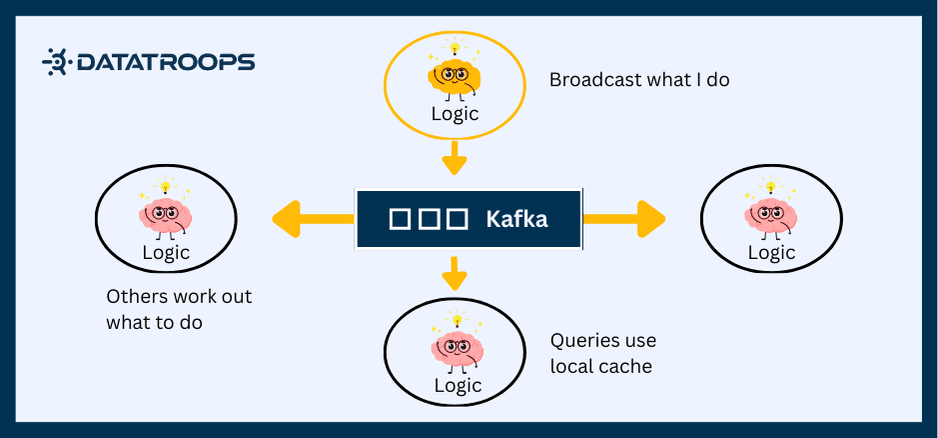
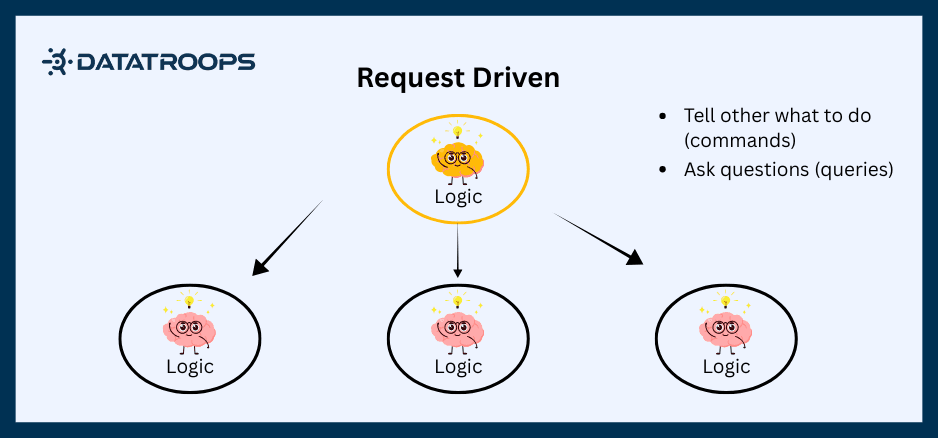
Modern software systems have fundamentally changed the way applications behave and communicate. Traditional web applications were largely request-driven: a user clicked a button, an API was called, a response was returned, and the UI updated accordingly. Testing these systems was relatively straightforward and could be handled by tools that focused primarily on UI automation or REST API validation.
Today's applications are different. They are real-time, asynchronous, and event-driven. Data is no longer fetched only when a user asks for it; instead, it is continuously pushed to the client as soon as something happens in the system. This shift has transformed user experience, but it has also made testing significantly more complex.
Applications such as chat platforms, live dashboards, financial trading systems, delivery tracking tools, collaborative editors, and notification systems all depend on real-time communication. Behind the scenes, these systems often rely on event streaming platforms like Kafka, backend services written in Node.js using KafkaJS, and frontend clients connected via WebSockets.
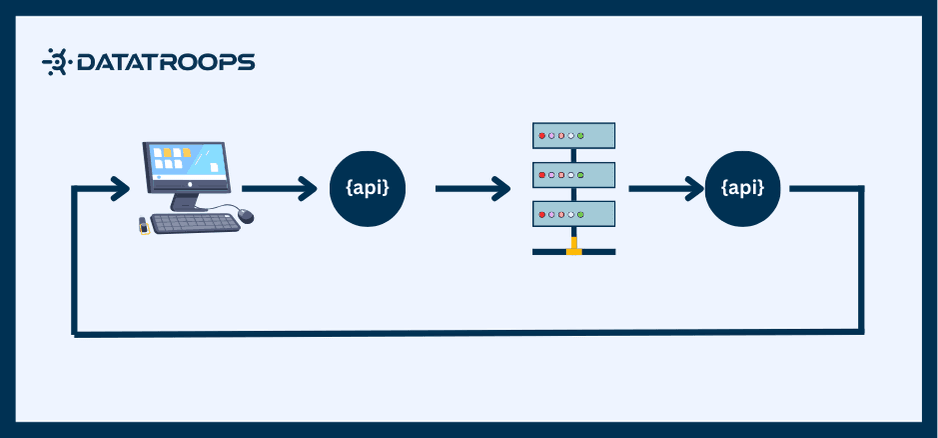
Testing such systems requires tools that can observe not just UI changes, but also events, streams, timing, and multi-user behaviour. This is where Playwright stands out. This article explores how Playwright enables reliable testing of real-time applications, why traditional tools struggle, and how KafkaJS fits into real-world real-time architectures.
Why Real-Time Applications Are Hard to Test
Real-time systems introduce several challenges that traditional automation tools were not designed to handle:
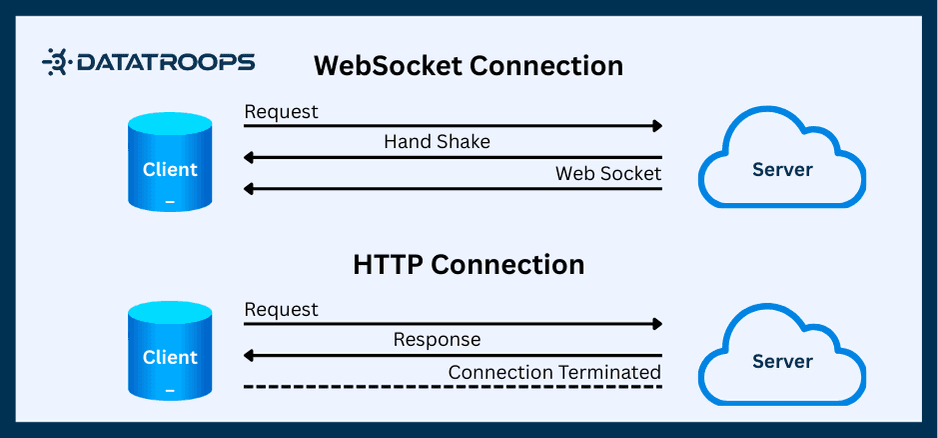
Because of these factors, real-time testing is less about "click and verify" and more about validating distributed system behavior.
Why Traditional Tools Struggle
Both Selenium and Cypress, while excellent for traditional web testing, face significant limitations when dealing with modern real-time applications.
Why Selenium Fails for Real-Time Applications
Selenium has been a cornerstone of test automation for many years, but it struggles with modern real-time systems.
- No WebSocket or Streaming Support:: Selenium has no native way to observe WebSocket traffic or streaming data. It can only interact with the DOM.
- Slow, Request-Based Architecture:: Selenium uses the WebDriver protocol, which introduces latency and makes it unsuitable for fast, event-driven updates.
- Manual Waiting and Flakiness:: Selenium relies heavily on explicit waits. In real-time apps where timing is unpredictable, this leads to flaky tests.
- Poor Multi-User Simulation:: Simulating multiple users with Selenium is complex, slow, and difficult to synchronize.
Selenium can verify UI snapshots, but it cannot validate why or how the UI changed.
Why Cypress Struggles with Real-Time Applications
Cypress improves on Selenium in many ways, but its architecture introduces other limitations.
- Runs Inside the Browser:: Cypress executes test code inside the same JavaScript environment as the application. This limits access to browser internals.
- No WebSocket Frame Visibility:: Cypress cannot capture low-level WebSocket frames (framereceived, framesent). It can only see DOM changes.
- Limited Browser Coverage:: Real-time apps often behave differently on Safari and mobile browsers. Cypress mainly supports Chromium.
- Weak Stream Mocking:: Cypress is good at mocking single API responses but struggles with continuous data streams.
Cypress can validate UI behaviour, but it lacks deep insight into real-time data flow.
Playwright: An Event-Driven Automation Model
Playwright is fundamentally event-driven, both in architecture and execution. Instead of only sending commands and waiting for responses, Playwright:
- Listens to browser events
- Reacts when something happens
- Works asynchronously, just like modern web apps
Playwright can subscribe to: Network events, WebSocket connections, Incoming and outgoing frames, Page lifecycle events, and UI changes triggered by backend events.
This aligns naturally with real-time applications, where: Backend systems (often Kafka-powered) emit events, WebSocket gateways push updates, and UI reacts instantly to those events.
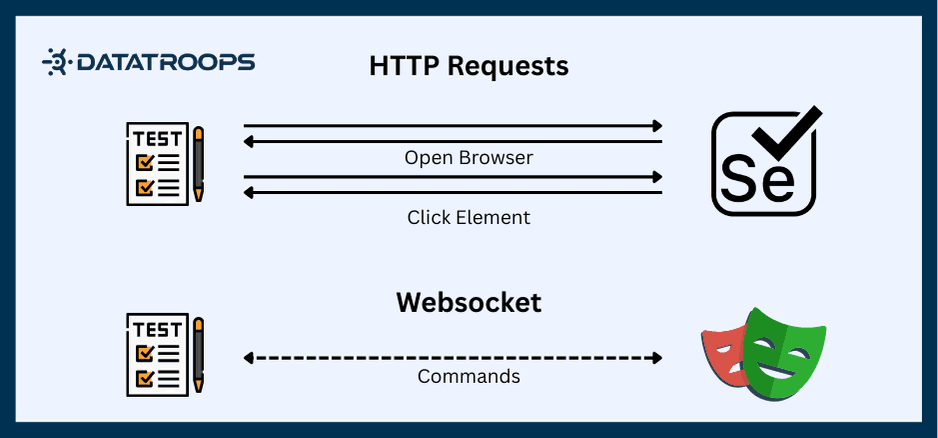
Event-Driven Validation Rather than asking 'Has the UI changed yet?' Playwright waits for 'An event has occurred → now validate the UI'. This makes Playwright far more reliable for streaming data, live dashboards, chat systems, notifications, and multi-user real-time flows.
Why Playwright Is Built for Real-Time Testing
Playwright was designed with modern, event-driven applications in mind.
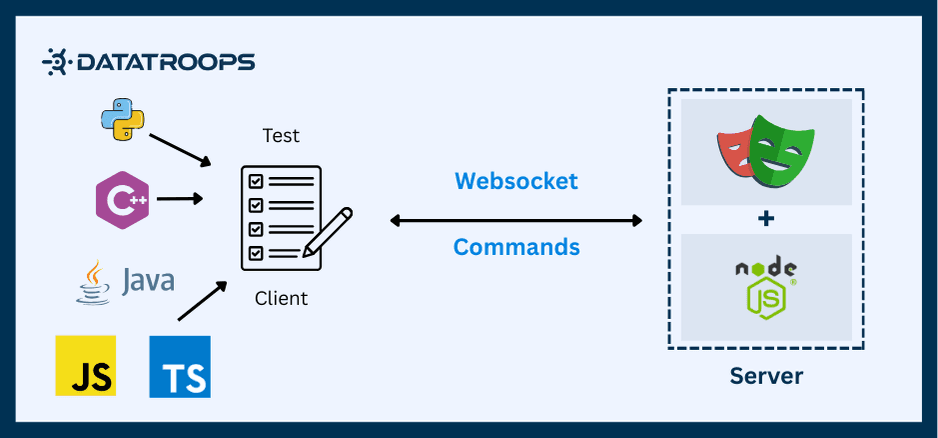
How KafkaJS Helps Real-Time Event Testing
Testing Event Streams with KafkaJS
In modern real-time systems, Kafka is the backbone of event-driven architecture. It acts as the system of record for business events such as user actions, state changes, and transactional updates. When Kafka is involved, testing must ensure that events are produced correctly, consumed correctly, and carry valid business data—independent of how those events are eventually delivered to clients.
What KafkaJS Testing Focuses On
KafkaJS is a Node.js client used by backend services to interact with Kafka. Testing Kafka-based systems using KafkaJS focuses on event integrity, not UI behavior. Key validation goals include:
- Ensuring the correct event is published to the correct topic
- Verifying event payload structure and business fields
- Confirming consumers can read and process events
- Detecting missing, duplicate, or malformed events
This type of testing is typically classified as integration testing or event-stream validation.
How KafkaJS-Based Validation Works
Kafka testing usually follows a produce → consume → validate model:
- Produce an event using KafkaJS (simulating application behavior)
- Consume the event from the Kafka topic
- Validate the event payload against expected rules
This confirms that the system is emitting correct events before any real-time delivery or UI rendering takes place.
Validating a Kafka Event Using KafkaJS
Testing Real-Time Delivery with WebSockets
While Kafka ensures event correctness, WebSockets are responsible for event delivery to clients. In real-time applications, WebSockets provide a persistent, bidirectional communication channel that allows the backend to push updates to the frontend instantly.
Testing WebSockets focuses on delivery behavior, not business logic.
What WebSocket Testing Focuses On
- Whether a client successfully connects to the server
- Whether messages are delivered in real time
- Whether messages arrive in the expected format
- Whether the UI reacts correctly to incoming events
Why WebSocket Testing Is Critical
Even if Kafka events are correct:
- Messages can be delayed
- Messages can be dropped
- Payloads can be transformed incorrectly
- UI updates may fail
WebSocket testing ensures that real-time data actually reaches users as intended.
Real-Time WebSocket Validation
framereceived: Fires every time the server sends data
API Testing as a Trigger for Real-Time Events
Even in real-time systems, APIs play a crucial role: Triggering actions, Authenticating users, Publishing events to Kafka, and Initializing system state.
Playwright's built-in API testing allows tests to: Call APIs directly, Trigger KafkaJS-based workflows, and Validate backend responses before real-time updates occur.
This makes Playwright ideal for end-to-end event validation.
Designing a Real-Time Automation Framework
A scalable Playwright framework for real-time testing should include:
- API Layer: for triggering actions
- WebSocket Utilities: for listening and validation
- UI Page Objects: for state verification
- Fixtures: for setup and authentication
- Parallel Execution: for multi-user scenarios
- Logging and Observability: for debugging timing issues
Such a framework mirrors real-world architecture.
CI/CD Considerations for Real-Time Tests
Real-time tests must be: Stable, Observable, Isolated, and Parallelizable.
Playwright integrates well into CI/CD pipelines:
- Parallel execution reduces runtime
- Event-based waits reduce flakiness
- Rich logs simplify debugging
Many teams run real-time tests as a separate pipeline stage to isolate complexity.
Want to see this in action? Check out our Playwright-based WebSocket automation repo that demonstrates how to validate real-time data streams with strict schema enforcement (Zod) and reliable, production-grade API tests.
Conclusion
Real-time applications represent the future of modern software, but they also introduce significant testing challenges. Traditional tools like Selenium and Cypress were not designed to handle continuous streams, event-driven updates, and multi-user synchronization.
Playwright's architecture, external browser control, native WebSocket support, built-in API testing, and parallel execution make it uniquely suited for real-time application testing.
When combined with event-driven backends powered by Kafka and KafkaJS, Playwright enables teams to validate the complete journey of data from event production to UI rendering.
In a world where real-time behaviour defines user experience, Playwright is not just a testing toolkit, it is a foundational component of modern quality engineering.
Want to learn more about QA automation best practices for real-time and streaming systems? Explore ourexpert-written blogs.
Want to build reliable, real-time systems with robust QA automation? Get in touch with our QA automation experts at info@datatroops.io
Build Real-Time Testing Solutions with Us
By submitting this, you agree to our Privacy Policy
Why Choose DataTroops for QA Automation?
We specialize in building comprehensive test automation frameworks for real-time, event-driven applications using Playwright, ensuring reliable testing for WebSockets, Kafka streams, and complex distributed systems.
KEY TOPICS COVERED
- •Playwright automation experts
- •Real-time WebSocket testing
- •Kafka & event stream validation
- •CI/CD pipeline integration
- •Custom framework development
We're Ready To Talk About Your Opportunities
Let's discuss how we can help transform your ideas into successful products. Schedule a consultation with our expert team today.